

Common Block Paving Driveway Failures (And How to Avoid Them)
Block paving is durable and repairable, but it only performs properly when the base, drainage, edging and jointing are done right. These are the common failure points to look for before you accept a quote.
Sinking and rutting
Sunken block paving is usually a foundation problem, not a block problem. If the excavation is too shallow, the sub-base is weak, or MOT Type 1 is not compacted in layers, the paving will settle under vehicle loads.
The safest prevention is a specification that confirms excavation, compacted MOT Type 1, a properly screeded laying course and final compaction after jointing sand goes in.
Edges spreading or dropping
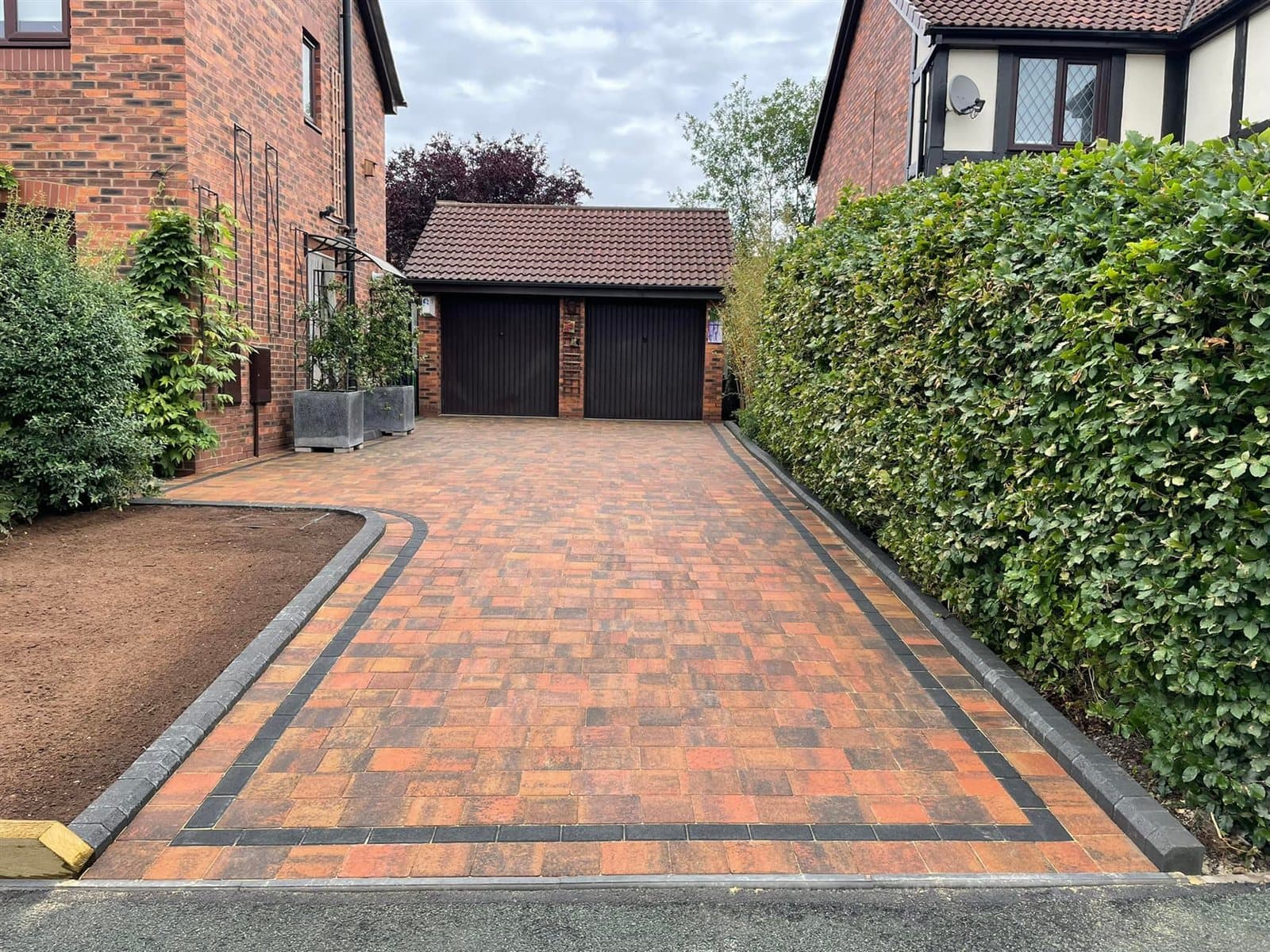
A block paved driveway needs restrained edges. Without concrete-haunched edge courses, the outside blocks can creep, drop or open up over time, especially where cars turn on and off the drive.
Good edging is not just a finishing detail; it locks the surface together and keeps the laying pattern tight.
Standing water and poor falls
Puddles normally mean the levels were not designed properly, the base has settled, or water has nowhere suitable to go. On front gardens, drainage also affects whether the surface complies with the permitted development rules.
A proper quote should explain whether the drive will use permeable blocks, fall to a lawn or border, or use ACO channels, gullies or another drainage route within the property.
Weeds and joint problems
Most weeds in block paving root in dirty or depleted jointing sand, not from deep underneath the driveway. If joints are left low, filled with organic debris or never topped up after the first winter, weeds and moss get an easy start.
Regular sweeping, occasional re-sanding and optional sealing after the surface has settled can keep joints cleaner for longer.
Loose, rocking or badly cut blocks
Rocking blocks usually come from an uneven laying course, poor compaction, missing jointing sand or movement around covers and thresholds. Bad cuts around edges, drains and manhole covers also make a new driveway look rushed from day one.
Good workmanship shows in the details: neat cuts, solid restraints, recessed covers where needed and a final sweep, sand and compaction that locks the surface tight.
How to avoid block paving failure
Before accepting a quote, ask what depth will be excavated, what sub-base material will be used, how the edges will be restrained, where the water will go, and whether recessed covers, muck-away and final jointing are included.
Quantock Paving quotes block paving with the preparation, drainage, edging and finishing details written clearly, so you can compare like for like rather than judging on the headline price alone.