

Resin Bound vs Resin Bonded: What's the Actual Difference?
These two names get mixed up constantly - sometimes even by installers. Resin bound and resin bonded are different products built by different methods, and the difference matters: one is permeable and the other is not, they have different durability profiles, and they have different implications for front-garden planning rules. Here is what you need to know before you request a quote for either.
By Quantock Paving Ltd — driveway and patio installers serving Somerset, Bristol and selected Devon locations.
The fundamental difference: how the resin is used
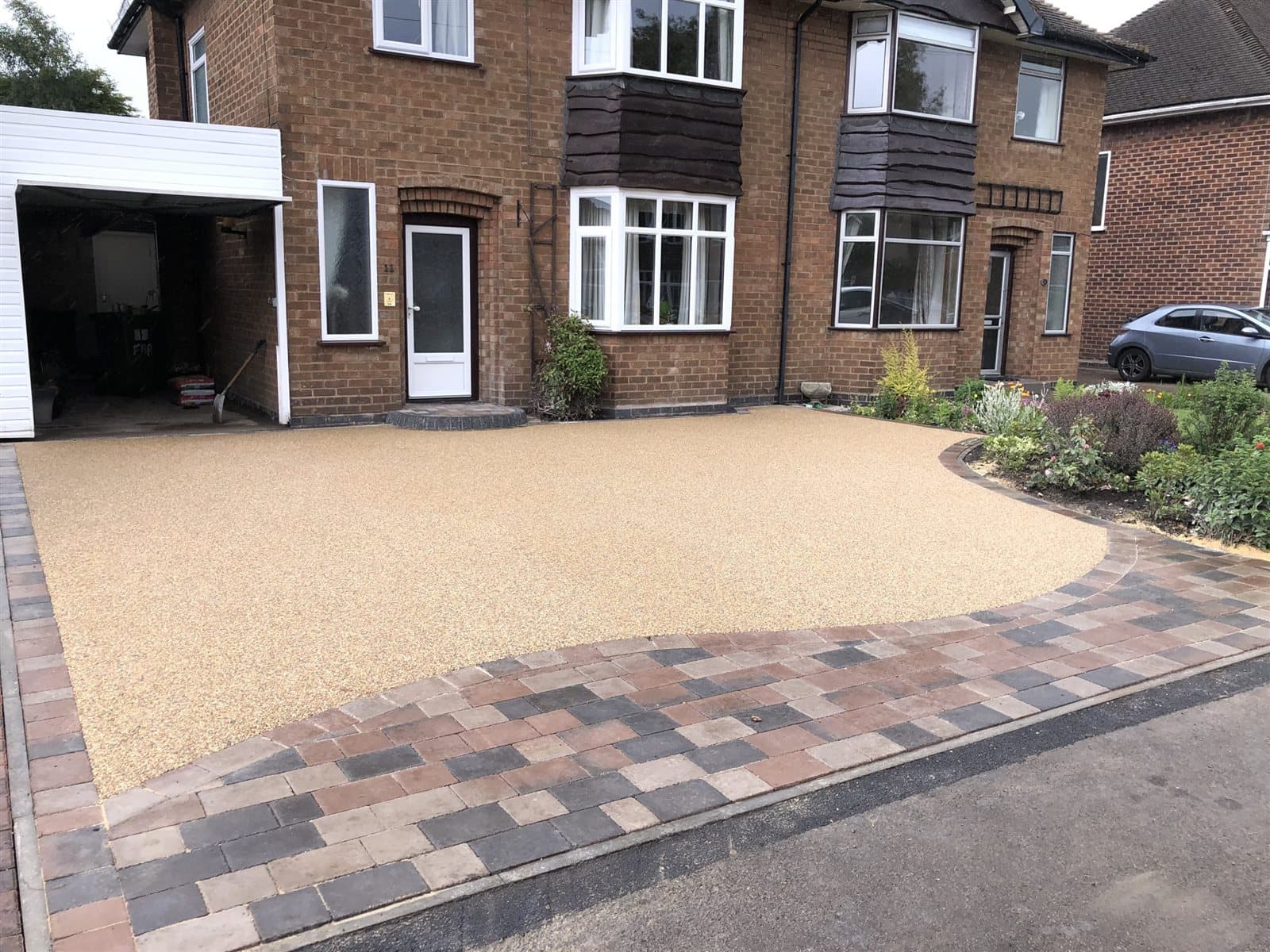
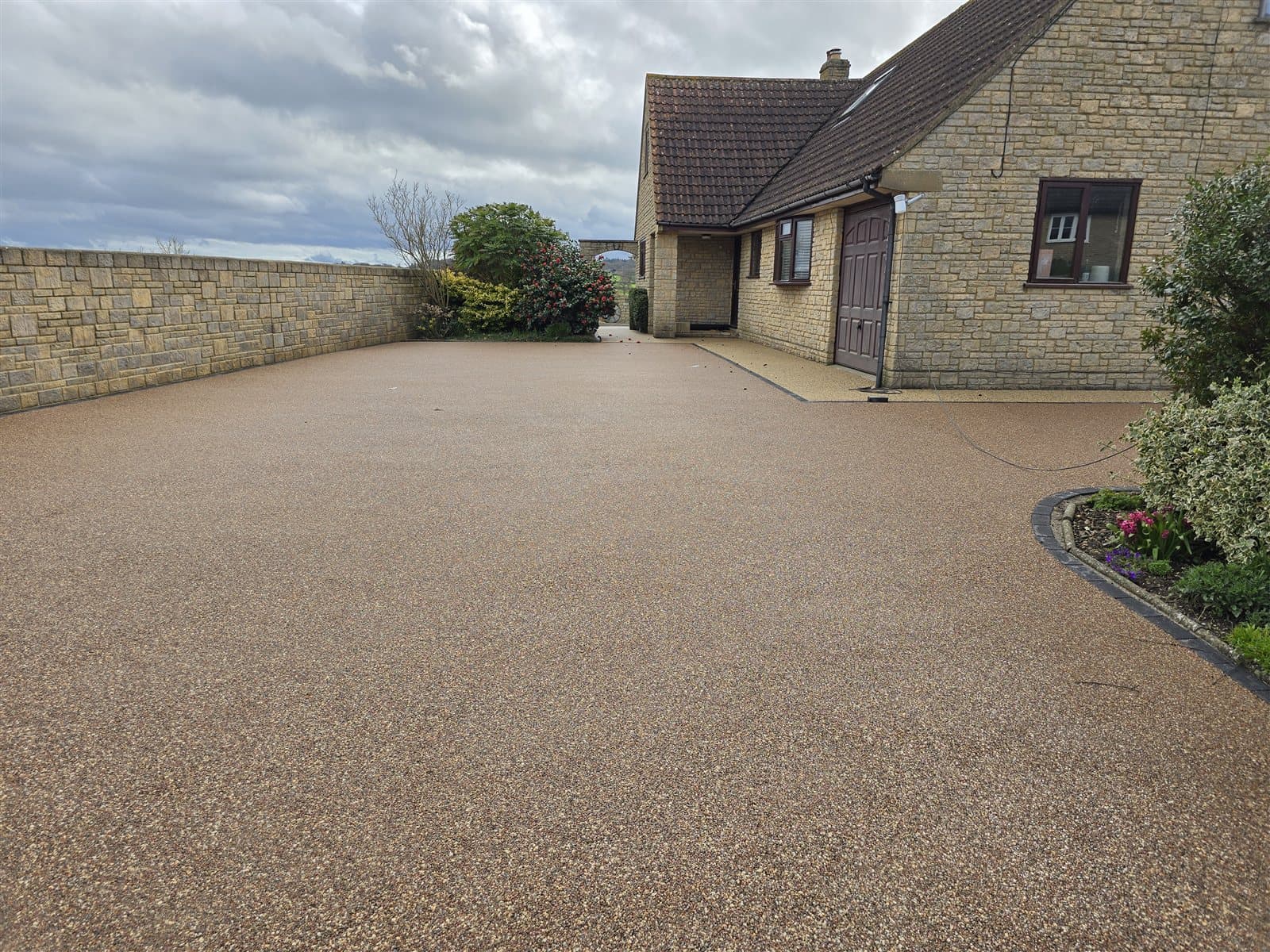
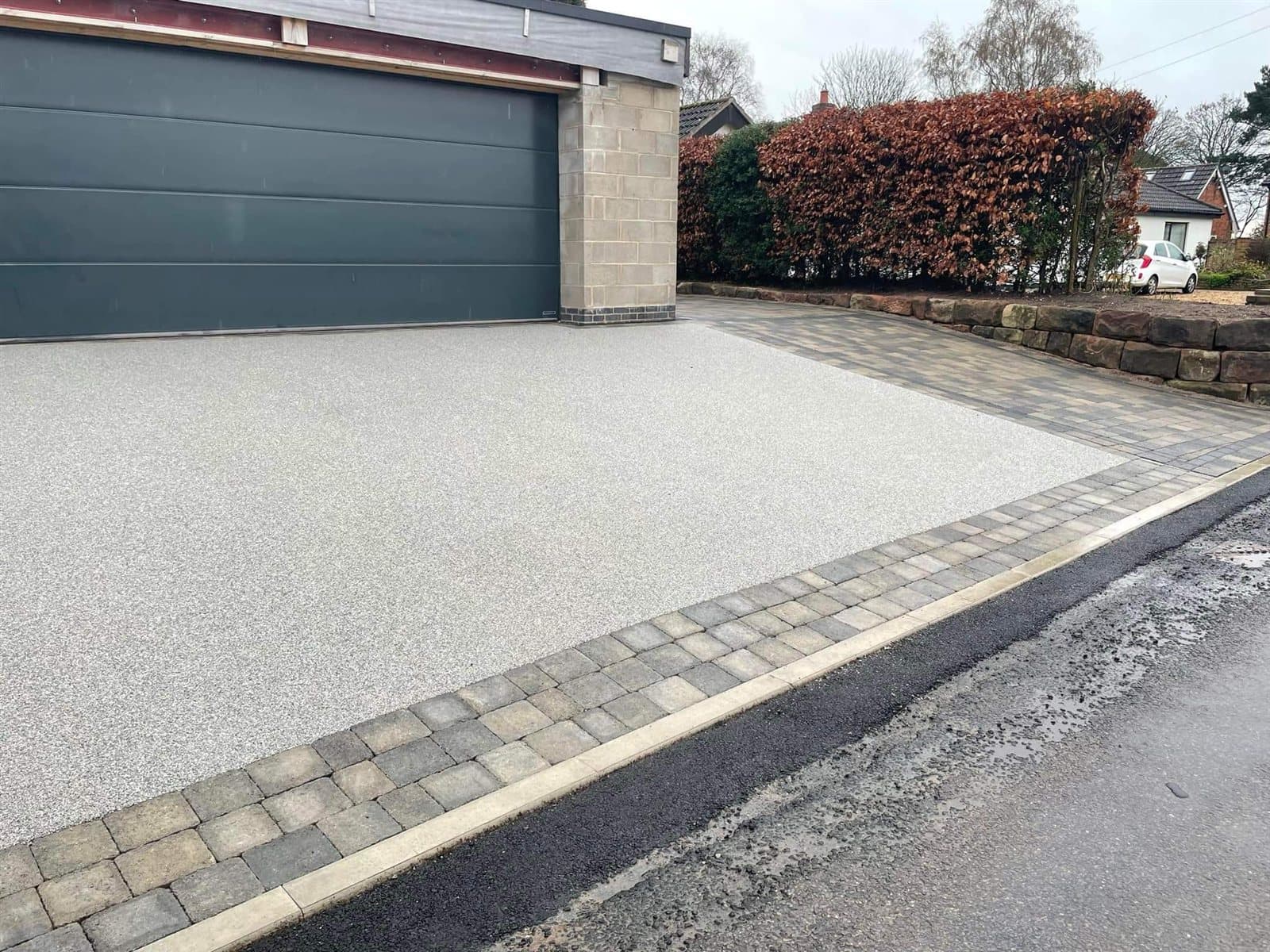
Resin bound: aggregate - natural stone chippings of a specified size and grading - is loaded into a forced-action mixer together with the resin binder. The mixer coats every individual stone evenly before the coated aggregate is trowelled onto a prepared surface. Every stone is encapsulated in resin. The result is a smooth, flat, bound surface.
Resin bonded: a thin layer of resin adhesive is applied directly to an existing surface, and dry aggregate is then scattered or spread over it and pressed down. The stones sit proud of the resin film rather than being mixed through it. The surface has a more textured, granular feel because the stones are visible and slightly raised.
Both products use resin and aggregate. The method of mixing and application, and the resulting surface properties, are quite different.
Drainage - the most important practical difference
Resin bound is permeable. Because the coated aggregate is trowelled to an even surface with small voids between the stones, rainwater drains through the surface and into the base below. On a suitable permeable sub-base construction, a resin bound surface satisfies the front-garden planning requirement that new surfaced areas over five square metres must be permeable or drain within the property rather than onto the public highway.
Resin bonded is not permeable. The stones sit on top of a solid resin adhesive film, and the base beneath - usually concrete or tarmac - does not allow water to pass through. Water runs off the surface rather than draining through it. This is not automatically a problem - surface drainage with correct falls and channels can still satisfy the front-garden rules - but resin bonded cannot be described as a permeable surface.
When installers or manufacturers describe a surface as 'SUDS-compliant' or 'permeable resin', they mean resin bound on a permeable build-up. Resin bonded does not qualify on grounds of permeability alone.
Durability on a residential driveway
Resin bound installed on a properly prepared base typically gives 15 to 25 years of service or more. The encapsulated aggregate is securely locked in, the surface stays smooth and intact, and it handles regular vehicle traffic well - including turning movements, which put significant shear stress on a surface.
Resin bonded is a lighter product. It is widely and successfully used on commercial footpaths, cycleways and footway surfacing where foot traffic is the primary loading. On a domestic driveway with regular vehicle use and turning movements, the bond between the surface adhesive and the stones can weaken over time, and individual stones can work loose. Performance varies considerably depending on the specification, the aggregate type and how the surface is used.
Neither lifespan figure is a guarantee - both depend on the quality of the sub-base, the installation standard and the loading the surface takes.
Appearance
Resin bound gives a smooth, seamless, flat finish. The aggregate sits flush with the surface. Close inspection reveals the individual stones, but the overall impression from standing height is of a clean, even surface. It can be installed around curves and features, and the finish holds up well.
Resin bonded has a more textured, slightly rough feel underfoot because the stones sit proud of the adhesive layer rather than being flush. The granular texture is more pronounced. Some people prefer this grip and appearance; others find the smooth finish of resin bound more suited to a residential frontage.
Both products come in a range of aggregate colours and blends. The choice of colour is broadly similar; the surface texture and finish are different.
What each can be installed over
Both resin bound and resin bonded can be installed over existing sound, stable concrete or tarmac - subject to the existing surface being in suitable condition. Neither should be installed over a failing, cracked, hollow or unstable base.
Resin bonded is often installed as a thin overlay because it is applied as a shallow adhesive layer with scattered stone. Resin bound overlays are also possible - many driveways are resined over sound tarmac or concrete to save on excavation costs - but the base must be genuinely stable, because a thicker, bound surface transfers any movement in the base directly to the finished surface above.
In both cases, a proper assessment of the existing surface condition before quoting is what separates a sensible recommendation from an optimistic one.
Cost
Resin bonded is generally cheaper per square metre than resin bound. The process is simpler, the material volume is lower, and it installs faster without the need for a forced-action mixer. These savings often make it attractive as a quoted figure.
Resin bound costs more because of the mixer equipment, the volume of resin and aggregate required, the skill and time involved in trowelling it correctly, and the more demanding base preparation standards that make it perform well over time. The longer expected service life means the total cost of ownership is typically better value on a properly installed resin bound driveway.
Neither product should be priced blind per square metre. The base condition, overlay versus full dig-out, drainage requirements, edging details and access all affect the total significantly. A free site visit is the only way to produce an honest written figure.
What Quantock Paving installs - and why
We install resin bound. The reason is straightforward: resin bound is the appropriate product for a residential driveway that needs to perform under vehicle loading, stay looking good for many years and meet current drainage expectations. It is the surface we are confident standing behind.
If a specific project required a resin bonded finish - a footpath, a specific commercial application - we would say so clearly. On a standard residential driveway or patio, resin bound is the product we recommend because it is the product we would use ourselves.
If you are comparing quotes and one mentions resin bonded while another mentions resin bound, they are quoting different products. Make sure you are comparing like for like before accepting either on price alone.