

Common Resin Driveway Failures (And How to Avoid Them)
Resin bound is an excellent surface - when it's installed properly. Almost every resin failure we get called out to look at comes down to a handful of avoidable mistakes, and nearly all of them happen before the resin is even mixed. Here's what goes wrong, why, and how to make sure it doesn't happen to you.
Cracking
Cracks in a resin surface almost always mean something is moving underneath. Resin laid over a cracked concrete slab will mirror that crack within a season or two as the base flexes - this is called reflective cracking. The fix isn't better resin; it's dealing with the base honestly before laying, by either preparing the joint properly or digging out.
Loose stone and surface break-up
If aggregate comes loose, it usually means the resin-to-stone ratio was wrong, the mix was laid in the wet or cold, or a cheap resin was used. A correctly mixed and cured resin bound surface holds every stone firmly. Some installers under-resin to save material - it looks fine on handover and sheds stone within months.
Puddling and standing water
Resin bound is permeable, so water should drain through it. Persistent puddles mean either the surface was laid over a non-permeable base with nowhere for the water to go, or the falls and drainage weren't designed. Standing water also accelerates other problems, so it's worth taking seriously rather than living with.
Crumbling or spreading edges
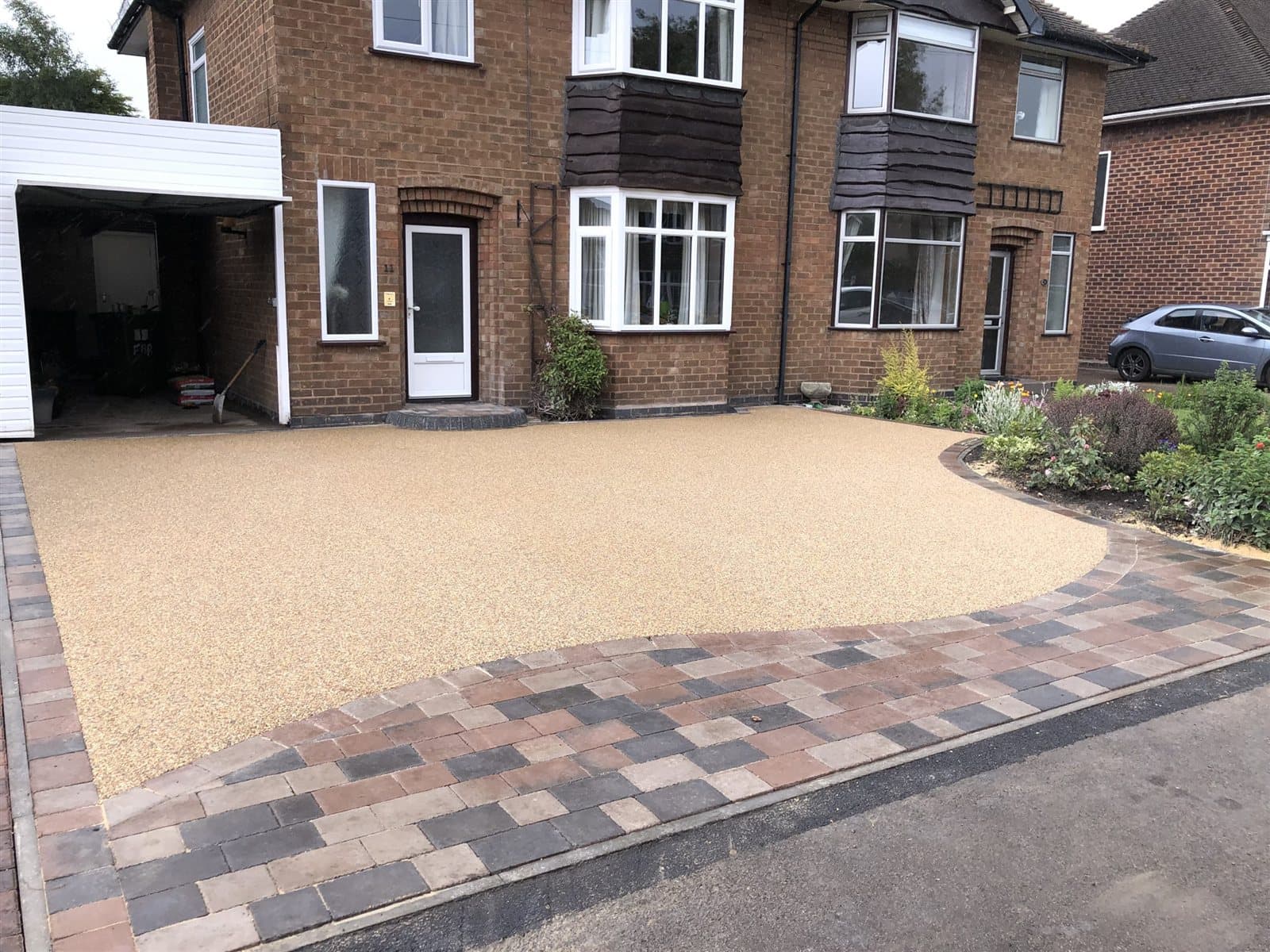
An exposed resin edge with no restraint is vulnerable - once it starts chipping, it travels. Every edge needs to finish against something solid: a block course, an existing wall, a channel or a proper edge restraint. Edge failure is one of the most common signs of a rushed installation.
Fading and ambering
Standard resins can amber slightly in strong sunlight, which shows most on lighter blends and south-facing drives. It's avoidable by specifying UV-stable resin where colour retention matters - a small extra cost that's worth it on the right job. An installer who doesn't mention UV stability on a pale blend hasn't thought it through.
The common thread - and how to avoid it
Notice that almost none of these are really about the resin. They're about the base, the drainage, the edges, the mix and the conditions on the day. Avoiding them is straightforward: insist on a proper assessment of the existing surface, a sound sub-base, designed drainage, restrained edges and the right resin specification - all confirmed in writing before work starts.
If your resin drive is already showing any of these signs, send us photos on WhatsApp (07379 046388). We'll give you an honest view on whether it's a localised repair or a base problem that needs addressing properly.